
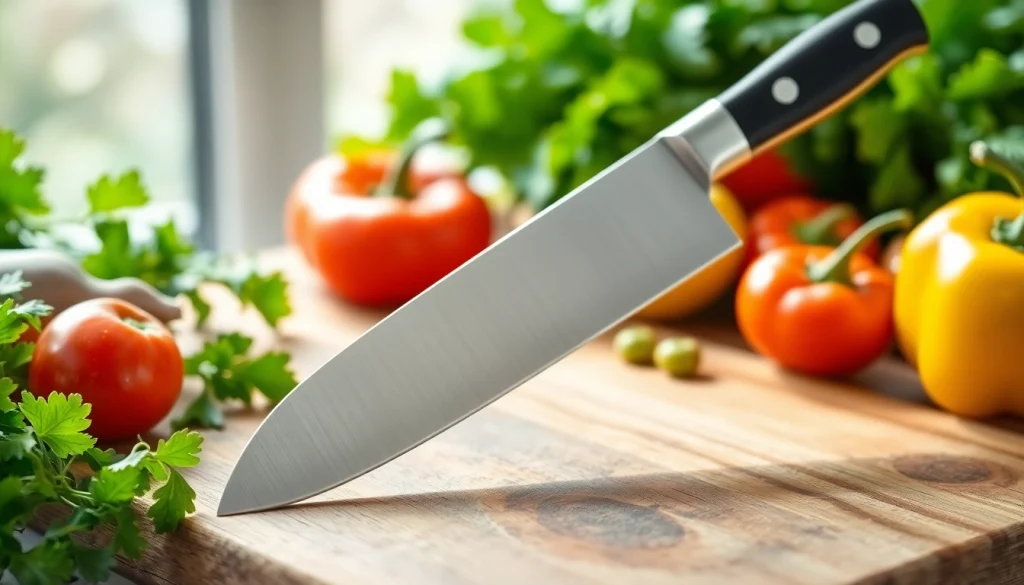
Understanding Chef Knives
What is a Chef’s Knife?
A chef’s knife is an essential tool in any kitchen, often referred to as a cook’s knife. Typically with a blade length ranging from 8 to 12 inches, it is designed to perform a variety of cutting tasks, including chopping, slicing, and dicing. Its versatile design makes it the go-to knife for both professional chefs and home cooks, allowing for efficiency and precision in food preparation. It is important to understand the different aspects of a chef’s knife before diving into the specifics of how to choose a chef’s knife. Knowing what you need and how the knife will fit into your culinary style will significantly improve your cooking experience.
Key Components of Chef Knives
Understanding the anatomy of a chef’s knife can help you make an informed decision when purchasing one. Here are the key components that contribute to the knife’s functionality:
- Blade: The heart of the knife, usually made of high-quality steel, which determines the sharpness and durability.
- Edge: It may be straight or serrated, impacting the knife’s cutting style.
- Spine: The top, unsharpened edge of the knife, which adds stability.
- Bolster: The thick junction where the blade meets the handle, providing balance and safety.
- Handle: Designed for comfort and grip; it can be made from various materials, affecting handling and feel.
- Tip: Useful for delicate tasks and precision cutting.
Different Types of Chef Knives
While a traditional chef’s knife is the most common, various types cater to specific culinary techniques:
- Western Chef’s Knife: Characterized by a curved blade for rocking cuts, ideal for general-purpose slicing.
- Asian Chef’s Knife: A heavier blade suitable for chopping and slicing, often used in Asian cuisine.
- Gyuto: A Japanese style that combines features of both Western and Asian knives, perfect for precision work.
- santoku: With a shorter blade, this knife is known for its versatility, excellent for both cutting and dicing.
Factors to Consider When Choosing
Blade Material and Sharpness
The blade material greatly influences the knife’s performance in terms of sharpness and durability. Common materials include:
- Carbon Steel: Known for its ability to hold a sharp edge, though it requires more maintenance to prevent rust.
- Stainless Steel: Resistant to rust and stains, making it low-maintenance, though it may dull more quickly.
- High Carbon Stainless Steel: Combines benefits from both materials, offering durability and ease of maintenance.
Sharpness is crucial; look for knives with a thin edge that can be easily honed or ground. Less maintenance and ease of sharpening can be more important than blade material for many chefs.
Weight and Balance
Weight and balance are critical factors. A well-balanced knife allows for more precise cuts without too much effort. Heavier knives are often preferred by professional chefs for the added force they can deliver, while lighter knives are favored for their agility. The ideal choice depends on personal preference and how comfortable the knife feels in your hand. To assess balance, hold the knife by the handle; the knife should feel like an extension of your arm, facilitating fluid movement in your cutting motions.
Handle Comfort and Ergonomics
Handle design significantly impacts comfort during prolonged use. The materials used can include wood, plastic, and rubber, each providing varying levels of comfort and grip:
- Wood: Offers a traditional feel but may require special care to maintain.
- Plastic: Often more affordable and easy to clean, but can wear out over time.
- Rubber or Synthetic Alloys: Provide the best grip and comfort, designed for ergonomic use.
Test different handles to determine which feels most comfortable for your grip style, considering hand size and fabrications that provide a secure hold.
Practical Tips to Test Knives
How to Hold and Use a Knife
To evaluate a chef’s knife properly, understanding how to hold and maneuver it is essential. Use a pinch grip, where your thumb and forefinger pinch the blade while the other fingers wrap around the handle. This grip enhances control and comfort. Practice chopping with the knife in this hold to see how natural it feels in your hand. Consider trying various tasks, such as dicing onions or cutting through tougher vegetables, to assess performance.
Testing the Edge’s Sharpness
Sharpness can be tested in several ways. One method is the paper test: try slicing through a piece of paper; a sharp knife should cut smoothly without tearing. Another method includes using a tomato, where a sharp knife should easily penetrate the skin without excessive pressure. This exploration of sharpness is critical when evaluating the usability of the knife in your kitchen endeavors.
Assessing Handle Fit
Effective testing of handle fit is paramount. When selecting a knife, grip it firmly, and simulate common cutting actions. Ensure that your fingers can comfortably reach the bolster and that no part of the handle causes discomfort, even after long periods of use. If you’re considering a knife with a bolster, make sure it allows for a comfortable grip without leading to fatigue.
Maintaining Your Chef’s Knife
Sharpening Techniques
Maintaining a sharp knife is crucial for performance. Regular sharpening with tools such as whetstones, honing rods, and electric sharpeners ensures your knife maintains its edge. Professional chefs recommend honing the edge regularly and sharpening it as needed. A well-maintained knife proves safer and more efficient in the kitchen.
Cleaning and Storing Knives
Cleaning practices can extend a knife’s lifespan. Always hand wash your knife rather than placing it in a dishwasher, to avoid chipping or damage. After washing, dry it immediately to prevent rust, especially for carbon steel knives. Proper storage is also vital; using magnetic strips, knife blocks, or sheaths protects the blade and keeps it easily accessible.
Common Mistakes to Avoid
Common misconceptions can lead to frustration and damage, including:
- Using the Knife for Improper Tasks: Avoid using a chef’s knife for tasks like prying open cans.
- Neglecting Regular Maintenance: Not sharpening or cleaning your knife can lead to long-term damage.
- Improper Storage: Failing to store your knife correctly can lead to dulling and accidents.
Being aware of these common pitfalls will help ensure the longevity and effectiveness of your knife.
Frequently Asked Questions
How do I know what size chef’s knife to buy?
Size depends on your cooking style and hand comfort. Generally, an 8-inch knife is versatile for most users, while larger sizes (10-12 inches) are better suited for experienced cooks handling larger ingredients.
Are expensive knives worth it?
Yes, a quality chef’s knife can enhance your culinary experience with better materials and craftsmanship, leading to improved performance or longevity, making them a worthwhile investment.
What’s the best way to sharpen a chef’s knife?
The best way to sharpen involves using a whetstone—holding the knife at a 15-20 degree angle and maintaining slow, steady strokes. Regular honing should keep the knife sharp between sharpening sessions.
Can I use a chef’s knife for other tasks?
Absolutely. Chef’s knives are versatile and can handle numerous tasks like slicing meats, chopping herbs, and dicing vegetables, making them an essential kitchen tool.
What materials are chef knives made of?
Chef knives can be made from various materials including carbon steel, stainless steel, or high carbon stainless steel, each offering different pros and cons related to maintenance, sharpness, and resistance to rust.